NutriKonsul NutriKonsul

Nutrition focus areas

Field 01

Nutrition

Field 02

focus

Field 03

areas

Field 04

for

Field 05

your stage & goal

Your starting point

Nutrition guidance is not one-size. A plan for a family with young children looks different from one built around training, or around eating habits that have held steady for years.

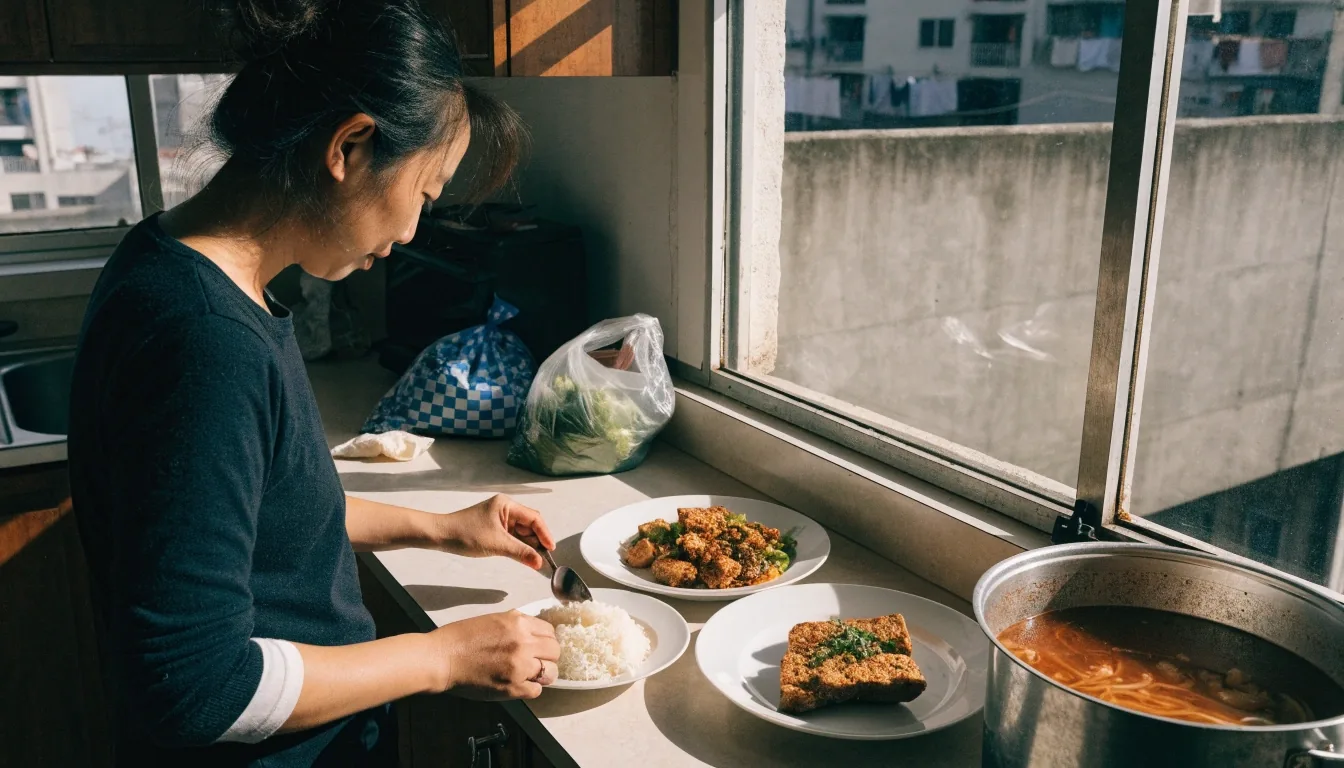
Bowls of rice, greens and tempeh arranged on a kitchen counter under hard noon light

Where to start

NutriKonsul works across several focus areas, and your intake form helps place you in the right one. You do not need to arrive with a label already chosen. What matters more is describing your week honestly: what you cook, when you eat, how you train, who sits at the table with you.

The six areas below cover most of the requests that come in. Read the one that sounds closest to your situation, and note anything that does not match. Your dietitian confirms the fit during the first session and can shift it if something else turns out to matter more.

The usual starting point

Everyday eating habits

Smallest changes, longest stay

The most common starting point, and the least dramatic. This covers portion awareness, meal timing, snack patterns, and the slow work of changing long-standing routines. Your dietitian uses your food diary to find where the plan breaks down in practice.

Changes tend to be small and specific rather than a complete overhaul of how you eat. If lunch is usually eaten at your desk in ten minutes, the first conversation is about that lunch — not about a new way of shopping. Snack patterns get the same treatment: what is actually in the drawer, what time it gets opened, and what a workable replacement looks like on a busy day.

Most people stay in this area for several follow-up rounds while the meal plan settles into a rhythm they can hold without thinking about it constantly. A food diary is the main input; the meal plan is the output, and it gets revised as your schedule does.


What a first session usually covers

  • Portion awareness across your normal meals
  • Meal timing against work and family hours
  • Snack patterns and where they come from
  • Which routines are worth changing first
A family dining table set with rice, greens, tempeh and soup under hard midday light

Family nutrition

One of the most requested focus areas in Indonesia, where meals are often shared. A family plan has to work for different ages at one table, which means adjusting portions and variety rather than cooking separate dishes.

Your dietitian accounts for what you actually cook, including dishes bought from a warung on busy days. The goal is one set of meals that suits the household — not a separate menu per person, and not a plan that collapses the first week someone has evening commitments.

Shared plates, adjusted portions — one plan for the table

Sports nutrition

Built around training load and recovery. Your dietitian adjusts meal timing and composition relative to when you train, and works with ingredients you already use.

Chat consultation handles quick questions before or after sessions. Progress is reviewed through follow-up as your training changes across a season.

What your week looks like

Training days and rest days get different meal timing, so the plan is not the same sheet seven days running.

What you already cook

Meals are built from ingredients and dishes that fit your kitchen, not from a shopping list you have never seen.

Between sessions

Short questions — a long session, a missed meal, a change of schedule — go through chat rather than waiting for the next appointment.

Across a season

As training changes, follow-up adjusts the plan with it. Nothing here is written to fix an outcome by a certain date.

Pregnancy and lactation nutrition

A focus area where guidance needs to track how things develop over months. Your dietitian adjusts the plan as your needs and routine shift, with follow-up rather than one static document.

Questions that come up between sessions can go through chat. This area is handled by dietitians whose focus includes it, not as a general add-on.

Older adult nutrition

Appetite, chewing comfort, and household size often change with age, and plans need to follow. This focus area looks at meal structure that stays realistic, including when cooking for one or two people.

Your dietitian works with locally available foods and the way meals are actually prepared at home — soft textures, smaller plates, and dishes that are not exhausting to make on a low-energy day.

Weight management

Approached as a sustained change in eating patterns, not a rapid result. Your dietitian reviews your food diary, adjusts portions and meal structure, and follows up as your routine shifts.

Coaching is usually the better fit here, because the work continues over weeks. Chat handles the small decisions in between — a work dinner, a stressful week, a plan that needs adjusting before the next session.

Nothing here is sold as a fixed timeline or a promised number on a scale. The plan changes as your routine changes, and the pace is set by what you can hold.

What the plan touches

How it shows up in practice

Food diary review

Your dietitian reads what you actually ate across a normal week, not a best-behaviour week.

Portion structure

Portions and plate composition get adjusted meal by meal rather than replaced wholesale.

Meal timing

When meals land against your day matters as much as what is on the plate.

Follow-up rhythm

Regular reviews keep the plan current as work, travel and family schedules move.

A meal plan here is a working document. It gets reprinted as your week changes, and the follow-up schedule is set by how much support you actually want.

Choosing your focus area

You do not need to decide before registering. Many people arrive with more than one concern, and the intake form captures that. Your dietitian will confirm the focus during your first session and adjust if something else turns out to matter more.

If your situation falls outside our dietitians' scope, we will say so directly — that is more useful than starting a plan that is not the right fit.

Start here

Complete the intake form first

The intake form asks about your day, your meals and what you want guidance on. It is the same form for every focus area, so nothing is locked in by choosing it early. You can note two or three concerns and let the first session sort them out.

Bring whatever you already have — a rough food diary, a list of dishes your household eats, or just the questions you keep coming back to.

How focus areas connect to your plan

Your focus area shapes the meal plan, the pace of follow-up, and which dietitian you are matched with. It is not a label you are stuck in.

If your goal changes, the plan changes with it. That flexibility is why we review rather than hand over a fixed document.

The meal plan

Dish choices, portions and meal structure follow from the area you are in — family cooking looks different from a training week.

Follow-up pace

Areas that move over months, like pregnancy and lactation, need tighter review rounds than everyday habits that settle slowly.

Dietitian match

You are matched with a dietitian whose focus includes your area, rather than being handed to whoever is free.

Chat between sessions

Short questions go through chat so the plan stays current without waiting for the next appointment.

When goals change

A plan can move between areas. The intake notes are already there, so the switch is a conversation rather than a restart.

Questions before you register

Short answers to what visitors ask most often when they are still deciding which area fits.

Full frequently asked questions
Can I choose more than one focus area?

Yes. Many people arrive with two or three concerns that overlap — a family plan plus a return to training, for example. The intake form has room for that, and your dietitian sorts out which area leads and which follows.

What happens if my plan is not the right fit?

It gets reviewed and changed. The focus area is a starting point, not a commitment, so if something else turns out to matter more the plan follows. Nothing has to be restarted from zero.

Do I need a food diary before the first session?

It helps, but it does not have to be perfect. Even a rough list of what a normal week looks like gives your dietitian something concrete to work from in the first session.

How is a focus area different from a meal plan?

The focus area decides what the meal plan should do — suit a shared table, support a training week, or follow a routine that has not changed in years. The meal plan is the practical output of that decision.

Registration

Register and confirm your area in the first session

Registration starts with the intake form. You describe your situation, and your dietitian confirms which focus area fits before any plan is written. If nothing here matches well, the team will tell you rather than stretch a plan around it.

Reach the team

Address
Jl. Diponegoro No. 88, Bandung, Jawa Barat, 40115, Indonesia
Hours
Monday to Friday, 9:00 AM – 6:00 PM

Not sure which area to pick? Send a short note describing your week and the team will point you to the closest fit — or say plainly if your situation sits outside what our dietitians cover.

Contact the team